
Thousands of bills have already been introduced in this 119th Congress that commenced with the start of the new administration. Congress.gov, the direct source for what is said and what has been proposed, word for word, has a detailed database of legislative actions, voting records, proposed bills, and other daily records. The White House also publishes the Executive Orders signed by Trump on its website, which are readily available and easily accessible to the public.
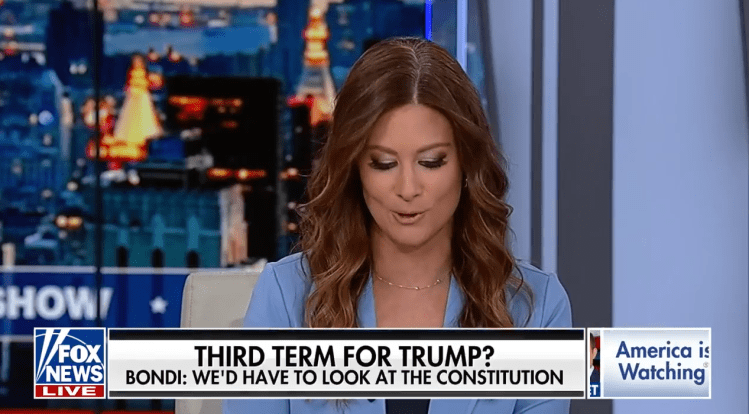
President Trump recently verbally confirmed he would not seek a third term, but that hasn’t stopped Republican Representative Andrew Ogles in the House from proposing a House Joint Resolution to allow it. But no need to panic just yet, as the vast majority of bills never make it to a vote, especially if this Amendment to the Constitution would apply to administrations moving forward.
Whether bills from the left or right side of the aisle are created out of good intentions or to stir up controversy, some, like new federal holidays, were definitely worth the read. Here are my selections of the most interesting (good or bad) bills and Executive Orders that the 119th Congress proposed between January and April 2025. They are all listed as written in the bills’ text, so there wouldn’t be any confusion about whether these are legitimate. Just in case, a link to the actual text has been added.
.
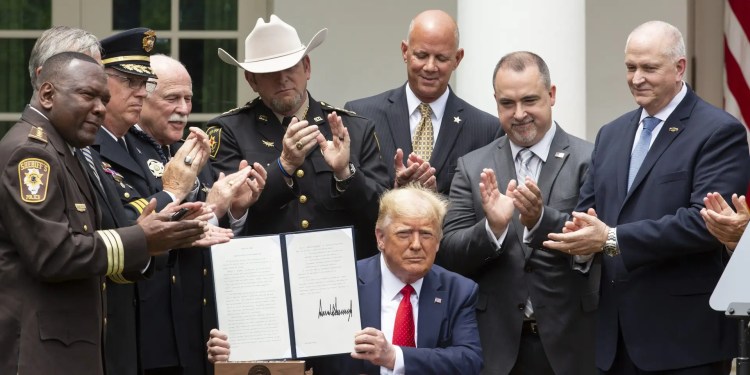
Executive Order: STRENGTHENING AND UNLEASHING AMERICA’S LAW ENFORCEMENT TO PURSUE CRIMINALS AND PROTECT INNOCENT CITIZENS (April 28, 2025)

For the full text, click here: Executive Order
My Administration will therefore: establish best practices at the State and local level for cities to unleash high-impact local police forces;
Sec. 3. Empowering State and Local Law Enforcement.
(a) The Attorney General and other appropriate heads of executive departments and agencies (agencies) shall take all appropriate action to maximize the use of Federal resources to:
(i) provide new best practices to State and local law enforcement to aggressively police communities against all crimes;
(iv) strengthen and expand legal protections for law enforcement officers;
(v) seek enhanced sentences for crimes against law enforcement officers;
Sec. 4. Using National Security Assets for Law and Order.
(a) Within 90 days of the date of this order, the Attorney General and the Secretary of Defense… shall increase the provision of excess military and national security assets in local jurisdictions to assist State and local law enforcement.
(b) Within 90 days of the date of this order, the Secretary of Defense, in coordination with the Attorney General, shall determine how military and national security assets, training, non-lethal capabilities, and personnel can most effectively be utilized to prevent crime.
Legislation Proposed by the 119th Congress
Topic: New Money with New Faces
H.R. 1761 Donald J. Trump $250 Bill Act: “To amend the Federal Reserve Act to require the Secretary of the Treasury to print $250 Federal reserve notes featuring a portrait of Donald J. Trump, and for other purposes

H.R. 1790 Golden Age Act of 2025: To require $100 notes to include a portrait of Donald J. Trump, and for other purposes.

Topic: Third Term President
H.J.Res. 29 – Proposing an amendment to the Constitution of the United States to provide that no person shall be elected to the office of the President more than three times.

“The proposed amendment specifies that no person shall be elected to the office of the President (1) more than three times, (2) for any additional term after being elected to two consecutive terms, or (3) more than twice after having served as President for more than two years of a term to which some other person was elected President (for example, if a President died after serving for one year and the Vice President became President for the remaining three years of the term, that person may subsequently be elected President no more than two times).
Currently, under the Twenty-Second Amendment to the U.S. Constitution, a person may not be elected President more than twice. Additionally, no person who has been President, or acted as President, for more than two years of a term to which some other person was elected President may be elected President more than once.”
Topic: Veterans

Over 79 mentions of the word “veterans” were found while reviewing the Republicans’ bills, with the majority of them created with good intentions. Here are a few that stood out.
H.R. 1228 Prioritizing Veterans’ Survivors Act
H.R. 1289 Veterans Nutrition and Wellness Act of 2025
H.R. 1290 Veterans Mental Health Crisis Referral Enhancement Act of 2025
H.R. 1384 Veterans Equal Access Act
H.R. 1527 Reforming Education for Veterans Act
Topic: New Federal Holidays
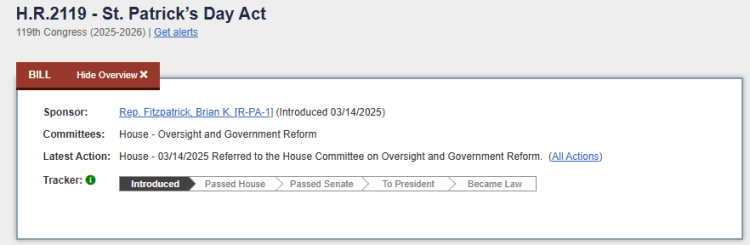
H.R. 2119 – St. Patrick’s Day Act – To amend title 5, United States Code, to establish St. Patrick’s Day as a Federal holiday.
H.R. 2951 – To amend title 5, United States Code, to designate Easter Monday as a legal public holiday.

Topics: Mental Health, Stock Trading, and Tariffs
H.R. 1649 Expanding Student Access to Mental Health Services Act: To amend the Elementary and Secondary Education Act of 1965 to improve mental health services for students, and for other purposes.
H.R. 1908 End Congressional Stock Trading Act: To prohibit stock trading and ownership by Members of Congress and their spouses and dependent children, and for other purposes.
H.R. 2665 Trade Review Act of 2025: “(a) Notification requirement.—Not later than 48 hours after imposing or increasing a duty with respect to an article imported into the United States, the President shall submit to Congress a notification of the imposition of or increase in the duty that includes—“(1) an explanation of the reasoning for imposing or increasing the duty; and
“(2) an assessment of the potential impact of imposing or increasing the duty on United States businesses and consumers.
(b) Expiration of duties; extension by Congress.—Any duty on an article imported into the United States shall remain in effect for a period of not more than 60 days, unless there is enacted into law a joint resolution of approval with respect to the duty under subsection (e).
(c) Disapproval by Congress.—If a joint resolution of disapproval with respect to a duty is enacted into law under subsection (e), the duty shall cease to have force or effect.”
Final Thoughts
There are so many records that it would be impossible to cover both sides, creating a need for a four-part breakdown: The House, the Senate, the Democratic Party, and the Republican Party. I used the ‘Title’ column to scan for any words or acronyms that stood out and prioritized any that had multiple co-sponsors. The list of proposed legislation below was chosen based solely on my opinion. If you are interested, numerous links throughout this article can direct you to the same data referenced here.
Whether it is for the love of controversy or a love for our country, the Republicans in Congress have introduced all sorts of topics. Next, we will look at House Democrats’ proposed legislation highlights. Stay tuned!

The data presented is directly from Congressional records published publicly online on Congress.gov. The same search selections I used for this article are available by clicking here.
In the meantime, check out this article:
Freedom of Speech Actually Does Have Limits that are Not Protected by the First Amendment