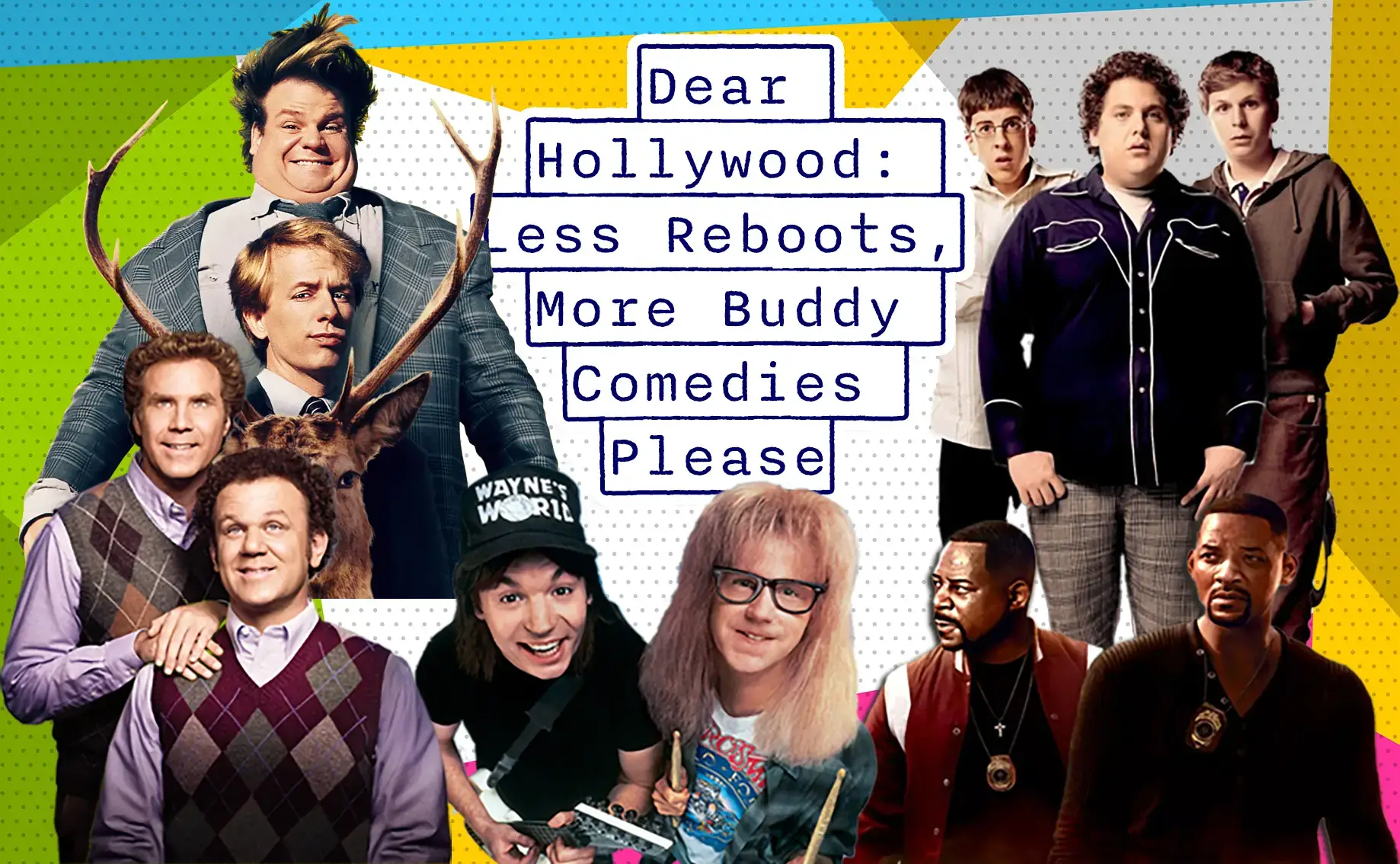
Goal: Constructing the ideal modern buddy comedy using tropes and ideas that have been created for us through decades of buddy comedies leading up to this moment
Let us dive right in.
Types of Buddy Comedies
We can’t construct our own buddy comedy without acknowledging what already exists, so, let’s focus on the three most common types of buddy comedies. Although there are many different styles of buddy comedies, the most successful and memorable ones always seem to be encased in one of these three categories:
The “Established Friendship”
This type of movie usually involves two main characters whose relationship has previously been established off-screen. We know this because when the movie starts, they are already engaged in an activity or conversation that lets us know the level of chemistry they hold, and/or the value of their relationship to each other. Examples of this type of movie would be; Booksmart (2019), Superbad (2007), Dumb and Dumber (1994), Romy and Michele’s High School Reunion (1997), Harold and Kumar Go to White Castle (2004), The Blues Brothers (1980), etc.

The “Strangers”
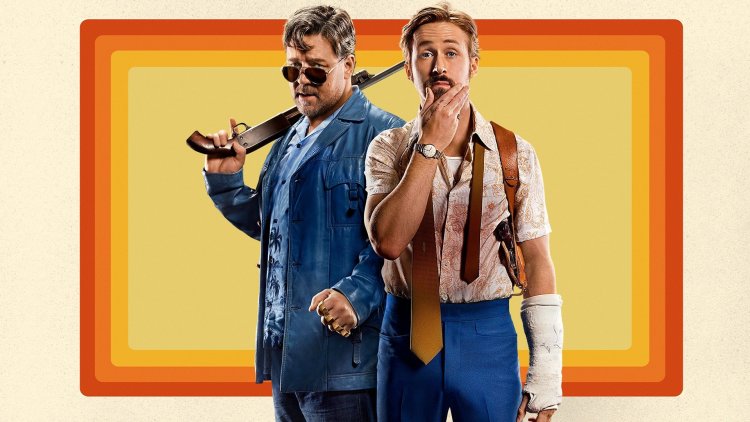
This type of movie is most commonly done in one of two ways; (1) Two characters are introduced to the audience separately in a fashion that showcases their most important character traits; (2) The audience is only introduced to one main character, and then introduced to the second character later on, having to learn about them in real-time through the POV of the first main character. These characters are then put into a situation in which they meet by chance and are forced to remain together for the rest of the film facing various obstacles that concern the both of them. They usually have different motives but need to work together in order to achieve their goals. Examples of this type of movie would be; The Nice Guys (2016), Due Date (2010), Planes, Trains, and Automobiles (1987), White Men Can’t Jump(1992), Step Brothers (2008), The Heat (2013) etc.

The “Nothing More Than Work Acquaintances”
This buddy-comedy trope revolves around two characters who are nothing more than work acquaintances. They either don’t know each other very well or, they know each other but do not get along very well. Then, an issue arises that forces the two of them to set aside their differences and solve the bigger problem. This is most commonly done through the style of a “buddy cop” movie––examples being; The Other Guys (2010), 21 Jump Street (2012), Tango and Cash (1989), Rush Hour (1998), etc.
Depending on the type of buddy comedy, there are usually some stereotypical characters involved. These characters sometimes have some conflicting ideology, but, in one way or another, help to balance each other out by picking up the slack where the other is lacking.
This could be in the form of a tough guy/smart guy duo like in The Other Guys; a seemingly normal/seemingly odd duo who each pull each other toward the center like in I Love You Man (2009); a scared-to-do anything/willing to try anything duo that still respect one another’s needs and boundaries like in Superbad or Booksmart; a charismatic and charming/blunt and rigid duo that are both a little more pensive than expected like in The Nice Guys.
Of course, there are more character types than just these, but almost all buddy comedy characters share portions of these qualities, either amplified or evolved in some way.
Genre Mash
The wonderful thing about comedies––specifically buddy comedies––is that they are so easily moldable into any other genre of movie. While this has always been the case, it seems to be more prevalent in today’s landscape than it has ever been before. The concept of a strictly pure comedy is almost non-existent, especially when it comes to big studio releases. The point is that it is essential to pick the correct genre mash-up when we are constructing the ideal modern buddy comedy. Let’s run through some of our options:
The Rom-Com
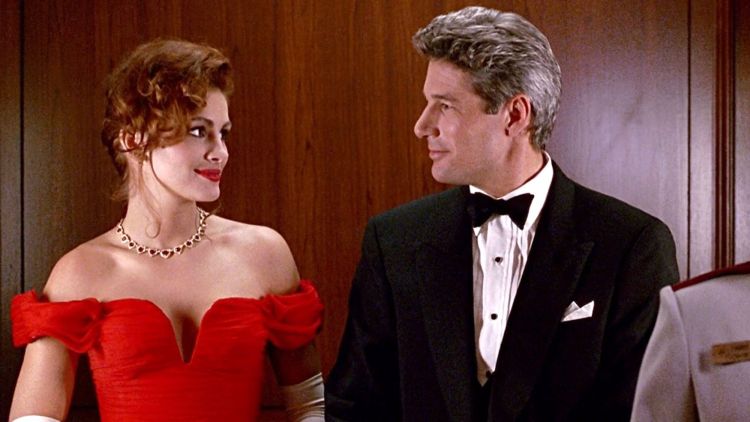
While this has been the most consistent style of comedy throughout movie history, it doesn’t feel right to include it in our buddy comedy blueprint. Even though most romantic comedies follow the buddy comedy archetype, the “buddy” aspect is removed once the characters eventually fall in love. Unfortunately, this disqualifies the rom-com genre as a whole.
The Action-Comedy
This style of movie makes for easy-to-tell stories that don’t have to rely too deeply on plot and mythos. Instead, it relies on guns, explosions, and ridiculous one-liners to keep us entertained––which it does, every single time. It’s no wonder why this is the most commonly used archetype for a buddy comedy.
The Horror-Comedy
There simply aren’t enough buddy comedy horror movies in existence. Although the list is small and this is a very specific type of movie, it is almost always effective. It’s almost identical to the action-comedy approach, but it uses zombies instead. Examples might be Zombieland (2009), Shaun of the Dead (2004), Tucker and Dale vs. Evil (2010) (replace zombies with “really dumb and clumsy teenagers”).
These movies are probably the closest we come to just pure comedies, but as with most movies, there needs to be an emotional breaking point where the two main characters are pitted against each other, only to come back around and realize that the importance of having each other outweighs the conflict they are having no matter what.
So, given all the information we have, let’s construct our ideal modern buddy comedy.
(And by “our”, I mean “my”, since I am sitting here typing this in my office with no one else but my dog. And he is not a big fan of comedies).
Type of Buddy Comedy: A personal favorite of mine is the “Strangers” storyline. I enjoy when two characters come together by nothing more than a chance encounter, learn about each other, disagree on almost everything, and ultimately figure each other out just enough to accomplish whatever problematic situation arose before them. The end of a story just feels so much more satisfying when you can witness the full arc of a blossoming friendship. So, that is my pick here.
Buddy Comedy Character-types: It always works for me when two almost completely opposite characters learn to work together to solve their problems. I think this is most effectively portrayed through the character types of the charismatic and charming/blunt and rigid duo. These characters never get along at first, but through their trauma and adversity, they’re willing to take a bullet for each other by the end of the movie.
Genre Mash: As much as I love horror movies and would love to see more horror buddy comedies, I just don’t know if it makes sense to pick that. Actually, never mind that. A horror comedy is exactly what I am going to pick right here. Horror comedies can use all of the same tropes as action comedies but are allowed a little more creativity and freedom. Also, this whole thing is made up and subjective.
So, if you were given the choice, how would you construct your ideal modern buddy comedy? Share your thoughts in the comments.