
Many of our elected politicians are reportedly making millions of dollars by trading stocks, sometimes under the names of their spouses or children. Democrats and Republicans (not all) are participating in the stock market, and every transaction by a politician can be found online, where rankings of who trades what change daily. The granular details of each politician available on CapitolTrades.com and other politician-focused stock trading sites make it impossible to hide in plain sight.
Click here to see the data directly on CapitolTrades.com. Below is a snapshot of the highest to lowest traded volume for these politicians over the last 180 days.
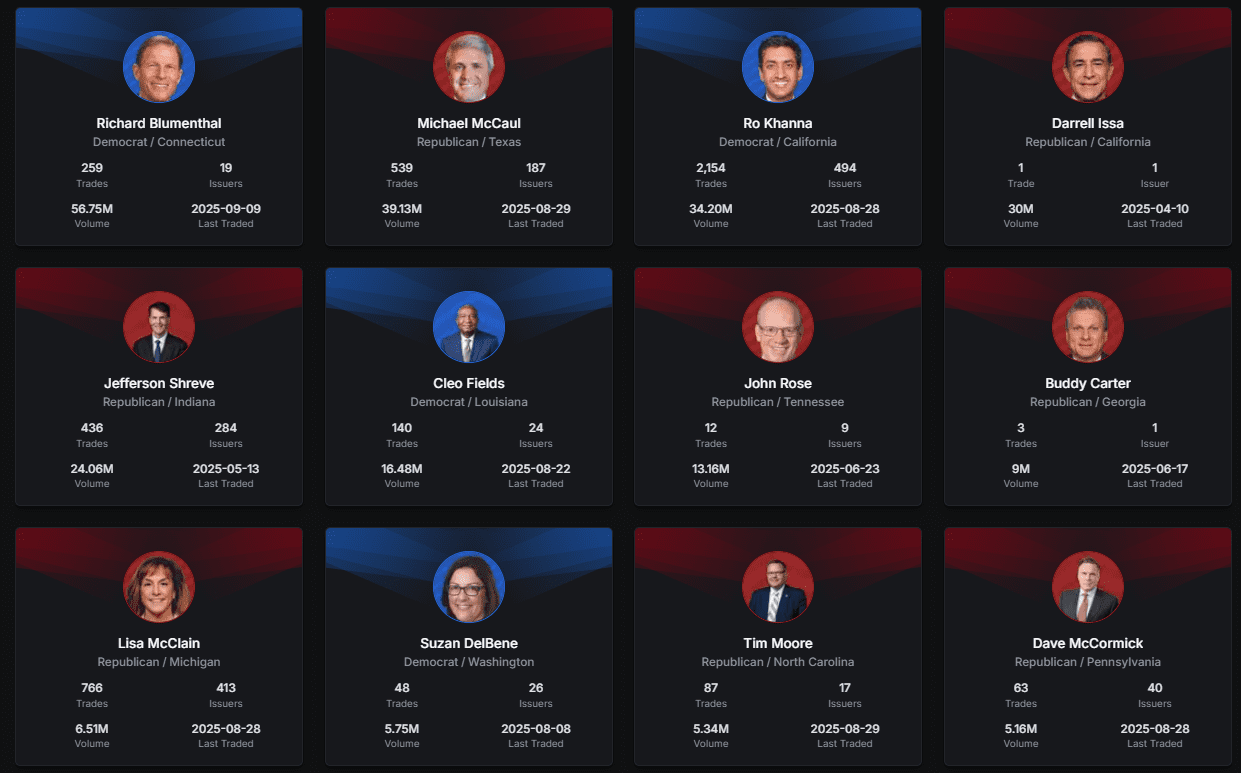
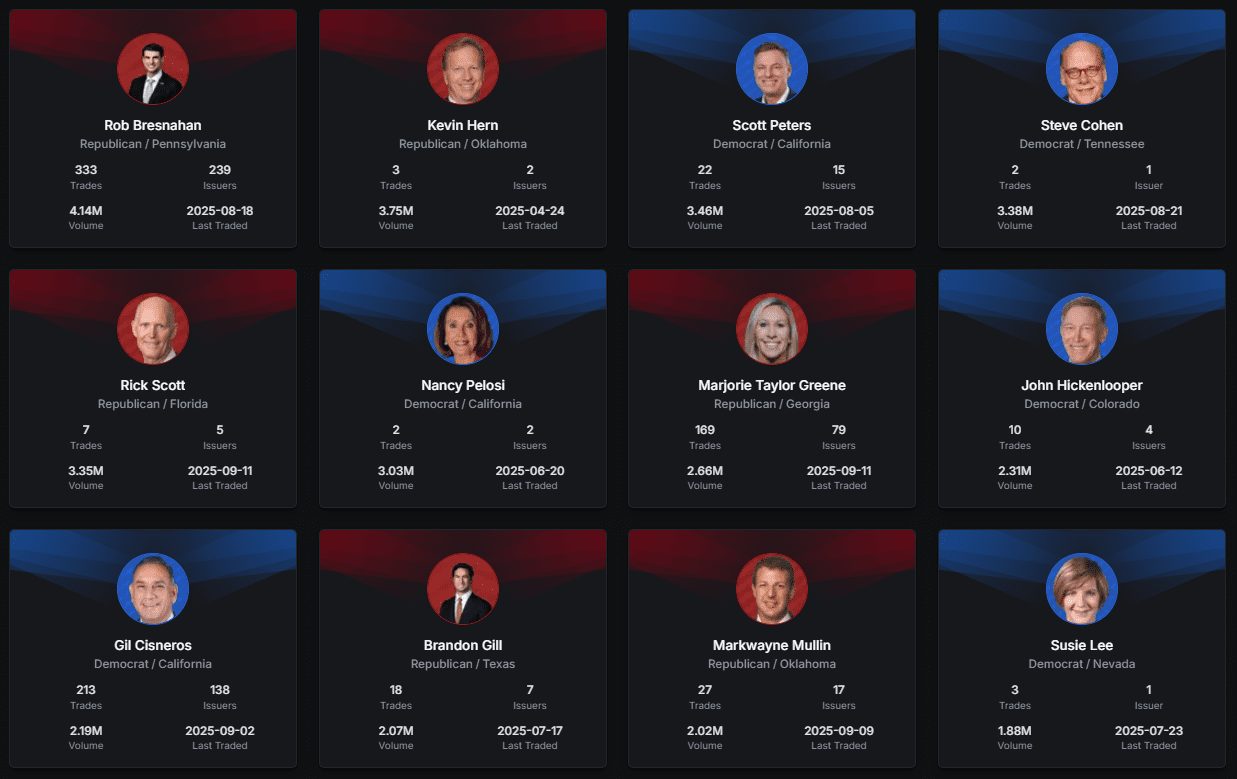
Why Aren’t the Current Rules Enforced?
The STOCK Act, passed in 2012, was meant to ensure transparency in lawmakers’ financial dealings by requiring members of Congress to report their trades within 45 days. Yet, recent filings show that some lawmakers continue to miss deadlines by months or even years. Perhaps there would be a stronger reason not to participate in stock trading if the punishment were more severe than $200, as it is today.
Senator Rick Scott Wants to Know if Anyone Wants to Be Poor
Senator Rick Scott, who recently submitted filings covering trades worth approximately $26 million, did so more than a year after the transactions took place.
Here is a part of the transcript and the clip itself.
“In this job, you know I don’t trade stocks. Somehow it’s suspect because I made money. I don’t know how many people in the audience, how many of you don’t want to make money? Anybody want to be poor? I don’t. Right. So, this idea that we’re going to attack people because they make money is wrong. but what I was just accused of is making money and somehow I can’t do I can’t be fair and do things the right way.”
– Rick Scott, Republican Senator from Florida
Here He is Fighting to Keep Trading:

For reference, representatives earn $174,000 as their base salary.
Other Analysis Exposes More Representatives with Questionable Trades
Quiver Quantitative brought Representative Tim Moore’s recent activity to light:

Which Entities are Being Bought the Most?
The top companies with the highest number of trades in the past 180 days:
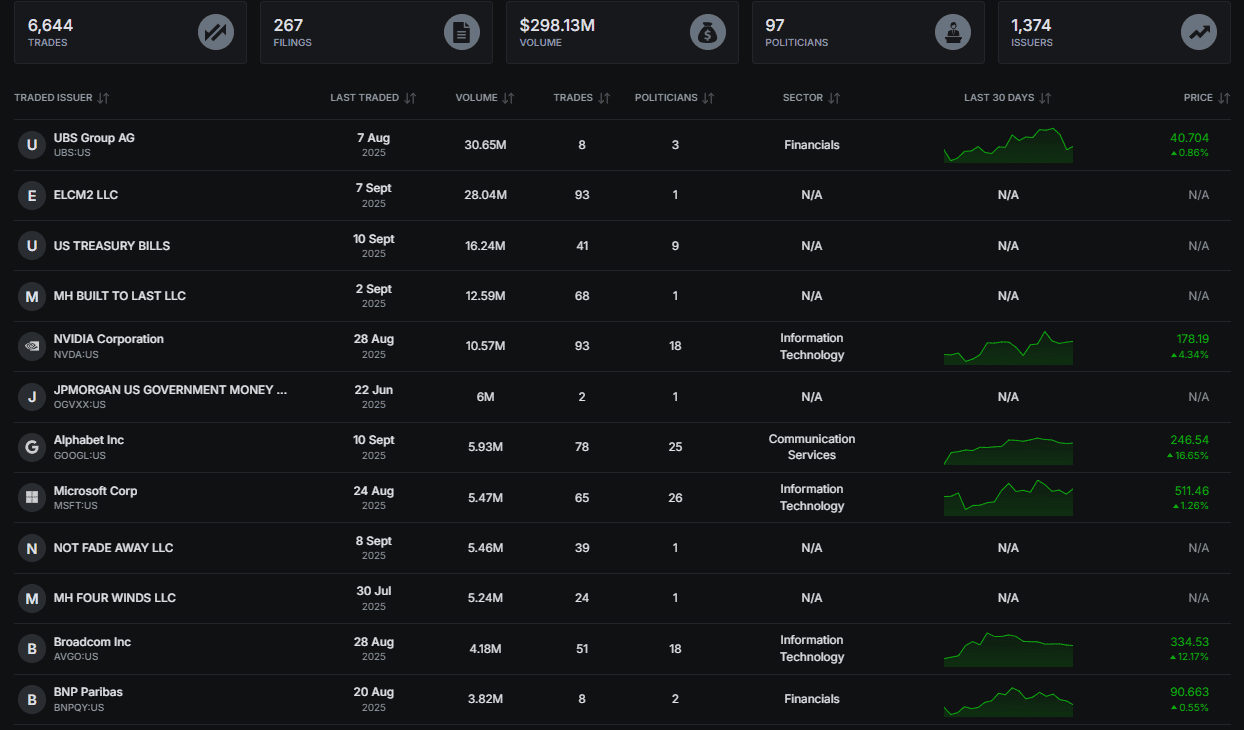
Considering who participates and defends the right to make money while serving as a representative is taking time and resources away from what they were elected to do: representing their constituents. Are they really representing the people, or are they making millions from their roles and don’t want to lose that stream of income? The part that might be the most frustrating is that this is only now coming to the forefront for many citizens, because I believe many of these politicians rely on the fact that most people wouldn’t think or care to examine the transactions they are making.
Bipartisan Efforts Stall Every Time
Some lawmakers are trying to represent their constituents as they were elected to do by supporting the efforts to enforce transparency and ethical standards when it comes to making laws that could benefit their stock purchases. Since the STOCK Act, several bills have been introduced and debated, but none have reached the finish line. Here are some of those legislations:
H.R.3388 – Preventing Elected Leaders from Owning Securities and Investments (PELOSI) Act (Introduced in House (05/14/2025)
H.R.1679 – Bipartisan Ban on Congressional Stock Ownership Act of 2023 (Introduced in House 03/21/2023)
S.2877 – A bill to ban stock trading for certain senior Government officials, and for other purposes. (Introduced 09/18/2025)
H. RES. 873 – Amending the Rules of the House of Representatives to prohibit Members of Congress from owning individual stocks. (Introduced in House 01/18/2022)
H.R.1908 – End Congressional Stock Trading Act (Introduced in House (08/29/2025)
H.Res.156 – No STOCK Resolution (Introduced in House (02/24/2023)
H.R.1679 – Bipartisan Ban on Congressional Stock Ownership Act of 2023 (Introduced in House (03/21/2023)
Will Our Representatives Listen to Us?
Clearly, there is support on both sides of the aisle. 86% of the public also agrees that these politicians should not be able to trade stocks. However, some of the members who have made millions from these stock trades are strongly opposed to banning them. If our representatives are supposed to represent their constituents, ideally, this should be a no-brainer. I have a feeling that it won’t go that way.