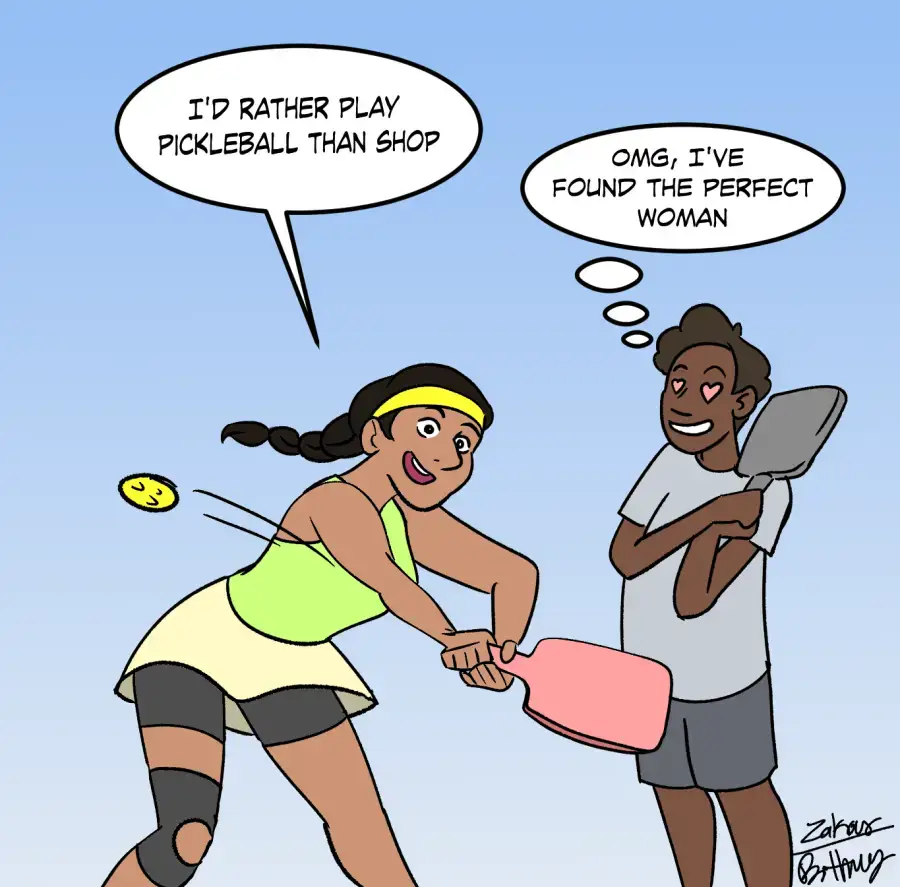
Written and Illustrated by John Zakour
As a health and happiness coach, I’ve been a big proponent of pickleball for over a decade. Part of my goal has been getting more people to play pickleball. Now that pickleball has gone mainstream, people don’t consider me weird. After all these days pickleball is in commercial after commercial. It’s even been referenced on the Simpsons. Homer called it, “tennis where you don’t have to move…” Where Homer’s trendy new friend corrected, “You do have to move a little.”
That said, you can certainly work up a sweat playing pickleball. Exercising can be a big boost to both health and happiness. That’s one of the reasons I encourage other people to give pickleball a try. Here are some more talking points I use just in case you want to help convert your non-pickleball-playing friends to picklers.
Pickleball is social
Pickleball is a fun workout that can get the heart pumping. With a proper warm up it’s also quite safe. Obviously, you can get hurt playing pickleball but you can tailor your game to reduce the chances of injury. I for one refuse to run back for a lob over my head (especially in social). You make a nice lob over me and I give you a tip of my cap. Or if I’m playing with a younger partner, I let them know, “Any lobs are yours.” I also let them know, “If I’m deep any dinks over the net are yours.” Pickleball is also great for building communication skills.
Another big plus is the smaller court helps make pickleball very social. You are so close to your opponents that you can’t help but interact with them. A little, “Nice shot!” or “Good get!” goes to building friendships. Though I will admit if I am playing against people I know very well there is also some good-natured ribbing going on. This friendly banter can add to the fun.
Pickleball is like Backgammon
I often refer to pickleball as the backgammon of paddle sports as pretty much anybody can learn to play it though it takes a lot of skill to master it. Like backgammon though you can still greatly enjoy it without mastery. Most people catch on to the gameplay within minutes and love it. For others, the trickiest part of learning pickleball is learning to keep score, especially in doubles. I look at the scorekeeping as another way pickleball can help with mental acuity.
Pickleball is for all ages
Playing on a court that’s much smaller than a tennis court with a much slower ball makes the game accessible to people of all ages. I’ve literally been on courts with a twelve-year-old and an eighty-plus-year-old player. It makes for some unique and fun interactions. I’ve been schooled a couple of times by players who are my seniors (like in their 70s and 80s).
Pickleball is the great equalizer (sometimes)
There’s a famous story about a mom named Meg who was playing with three Pittsburgh Steelers and taking them to town. NFL player TJ Watt said, “Meg was serving heat. We had trouble all day.” The smaller court size makes it easier for a mom like Meg to keep up with three pro athletes.
Pickleball is awesome
It amazes me that there are a number of people who may see some factors of life differently, but we learn that we have a common bond with pickleball. Pickleball shows we can disagree on stuff and still be friends. In fact, now a lot of my off-the-court interactions are with fellow pickleball players who have gone from pickleball friends to everyday good friends. That’s a huge factor in making pickleball such a healthy activity and helps build a stronger community.
Written and illustrated by John Zakour